
Mother Dairy on Tuesday said it will pass on 100 per cent GST reduction benefits to consumers and most of its products including value-added dairy products and processed foods (under Safal brand) will become cheaper with effect from September 22. Mother Dairy, a wholly-owned subsidiary of National Dairy Development Board (NDDB), said that prices of paneer (200 gms) will come down from Rs 95 to Rs 92, Ghee Carton Pack (1 litre) from Rs 675 to Rs 645, and butter 100 gm from Rs 62 to Rs 58.

Mother Dairy is targeting a revenue of Rs 20,000 crore by financial year 2026 (FY27) as it continues to identify white spaces and introduce new products, the company said. On Wednesday, it launched a new "pro" range of products enriched with protein, starting with milk enriched with 30 per cent more protein than regular milk.
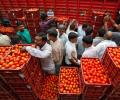
The rates of peas, which were ruling at Rs 139 per kg last week, have come down to Rs 79 per kg.

Several fast-moving consumer goods (FMCG) companies have said that they would pass on the full benefit of goods and services tax (GST) rate cuts to consumers starting September 22. Dairy major Mother Dairy, on Tuesday, announced rate cuts in products spanning its portfolio-- from milkshakes to paneer and jams to frozen products under its Safal brand.
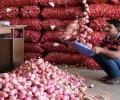
The government's subsidised onion sale initiative, launched on September 5, has led to price drops in major cities within days, the consumer affairs ministry said on Saturday. In Delhi, retail onion price fell from Rs 60 to Rs 55 per kg, while Mumbai saw a decrease from Rs 61 to Rs 56 per kg. In Chennai, the retail price reduced from Rs 65 to Rs 58 per kg, the ministry said in a statement.

Tomato prices are likely to touch Rs 300 per kilogram in the coming days and the prices of vegetables are also on the rise, according to wholesale traders. Kaushik, a member of Agricultural Produce Marketing Committee (APMC), said that vegetable wholesalers are facing losses as the sale of tomato, capsicum, and other seasonal vegetables has fallen drastically. He said that the prices of tomatoes have shot up to Rs 220 per kilo from Rs 160 per kilo in the wholesale market, owing to which retail prices can also go up.
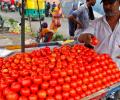
Tomato prices soared to Rs 100 per kg in retail markets of the national capital on Saturday as adverse weather conditions in various parts of the country continue to affect supplies of the essential kitchen staple. Tomatoes are available at Rs 100 per kg at Mother Dairy's retail outlets, Safal, in the national capital.
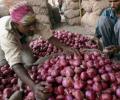
The Centre on Thursday began the first phase of retail sales of onion at a subsidised rate of Rs 35 per kg to provide relief to Delhi-NCR and Mumbai consumers from rising prices of the kitchen staple. NCCF and NAFED, which are maintaining a buffer stock of 4.7 lakh tonne onion on behalf of the government, will undertake the retail sale through their own stores and mobile vans. Onion will be sold at 38 retail points in Delhi-NCR and Parel and Malad in Mumbai.
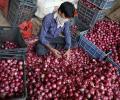
In a significant move to control spiralling onion prices ahead of the festive season, the government will transport 1,600 tonnes of buffer stock via railways from Maharashtra to Delhi - the first such initiative using rail transport for the kitchen staple. The special rake, dubbed 'Kanda Express', will depart from Maharashtra's Lasalgaon Railway Station and reach Delhi's Kishanganj Railway Station on October 20, Consumer Affairs Secretary Nidhi Khare announced on Thursday. The government expects this bulk movement to help stabilise prices in the Delhi-NCR region, where buffer stock onions are currently being sold at a subsidised rate of Rs 35 per kg.

Onions, too, are expensive at Rs 60-70 per kg, while other major green vegetables are ruling between Rs 35 and Rs 90 per kg.

The Safal National Exchange, an on-line spot exchange based in Bangalore has begun online spot trading in mangoes.
Onion prices had peaked to Rs 57 per kg on August 22.
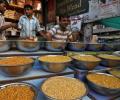
Retail tur dal prices on Monday shot up to Rs 200 per kg despite the government's steps to boost supply and check prices, aggravating consumers' woes.
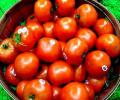
The prices of tomato are continuously moving up with the onset of monsoon due to strained supplies and higher wholesale prices in key producing states.
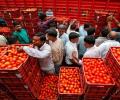
In a first, the Centre will start selling tomatoes at discounted rates in retail markets in the national capital and few other cities from Friday to provide relief to the consumers as the price of the kitchen staple is ruling high at over Rs 200 per kilogram in some parts of the country.
Both companies are in talks with a Bengaluru-based non-governmental organisation, International Competence Centre for Organic Agriculture, for the supply of organically-grown vegetables to their canteens.
The government on Saturday imposed a minimum export price (MEP) of $800 per tonne on onion exports till December 31 this year with a view to increase availability of the vegetable in the domestic market and contain prices. The decision will come into effect from October 29. Besides, the government has also announced the procurement of additional 2 lakh tonnes of onion for the buffer, over and above the 5 lakh tonnes already procured.

In a statement, the department of consumer affairs said about 18,000 kg of tomatoes were sold across Delhi-NCR to retail consumers.
In the last 15 days, the rates have gone through the roof and the key vegetable is being sold at Rs 80-100 per kg by local vegetable vendors depending on the quality and locality.
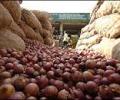
Traders said wholesale prices are firm as supplies from producing regions have been lower in the past couple of days.
All India average retail tomato price, which has shot up by 63 per cent to Rs 67 per kg over the last year due to unseasonal rains, are likely to soften from December with the arrival of fresh crop from northern states, the government said on Friday. In the case of onions, retail prices have substantially subsided below to the level that prevailed in 2020 and also 2019, it said. "Tomato arrivals from north Indian states will start from the beginning of December itself, which will add to availability and lead to fall in prices.
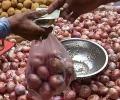
During this time of the year, potatoes and vegetables come from Punjab and Haryana.
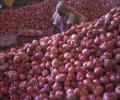
There was a delay in sowing of kharif onion because of late arrival of monsoon and later floods in many states damaged the crop.
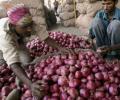
The crop is currently trading at Rs 22 a kg compared to Rs 12.50 one month ago.

Daily wage earners and casual low income group workers were the worst affected

The long-neglected fruit may finally get the recognition it deserves.

Curfew-like situation prevailed in East Delhi's Trilokpuri area for the third consecutive day with people not being allowed to step out of their houses though no untoward incident took place in the violence-hit locality on Monday

From small retailers' experiences with e-wallets to digital transaction numbers post demonetisation, Geetanjali Krishna and Karan Choudhury find out where the truth lies.
 © 2026 Rediff.com - Advertise with us - Disclaimer - Privacy Policy - Sitemap - Feedback - About us - Terms of use - Grievances